
Thessaly
A mortal caught in the divine drama of gods reborn.

via Wikipedia: Erysichthon of Thessaly · see source
Thessaly is a character from Brian K. Vaughan's other series, *The Wicked + The Divine*, and has no presence in *Y: The Last Man*.
- Franchise
- The Wicked + The Divine (comic series)
- Role
- Supporting character
- Setting
- Modern-day Earth, reincarnated gods every 90 years
- Creator
- Kieron Gillen (story), Jamie McKelvie (art)
Lore & Background
Thessaly is a character from *The Wicked + The Divine*, not *Y: The Last Man*. In *The Wicked + The Divine*, she is a mortal human who becomes entangled with the pantheon of reincarnated gods. The series follows a group of individuals who are reincarnations of various deities from world mythology, granted godlike powers but fated to die within two years. Thessaly's role involves navigating the complex politics and dangers of the godly community, distinct from the post-apocalyptic setting of *Y: The Last Man*.
In Their Own Story
The rain had stopped, but the streets still glistened like something wet and alive. Thessaly stood at the edge of the community's gathering space, arms crossed, watching the others argue about rations. Somewhere behind the corrugated walls, a generator coughed its low, steady rhythm. She could feel the vibration in her molars. A woman two seats down caught her eye and mouthed a question—*you coming or not?*—and Thessaly shook her head, just barely. The night air smelled of wet concrete and the faint, sweet rot of overripe peaches left in a crate by the door. She walked. The city stretched out in every direction, dark and humming with the small, desperate lives of everyone still trying to be someone. Behind her, the argument swelled, then thinned, then was swallowed by the hum of the generator. She did not look back. She never did, not anymore.
Reader's Guide
Thessaly is a supporting figure in Y: The Last Man, appearing within the ensemble cast that populates the world after the global extinction of male mammals. Their role is that of a community member navigating the new social order rather than a central plot driver. Their relationship to Yorick Brown is one of distance and observation. Y is, to most of the world, a symbol, a political object, a question. Thessaly relates to that reality in the small, human way: not as a cause to champion or a threat to eliminate, but as an inconvenient fact of the new world that complicates daily life. Their interactions, where they occur, are grounded in the mundane friction of a person trying to live while the world revolves around a single, singular figure. Thessaly's motivations are rooted in survival and the preservation of the small community around them. In a world where the Queens impose their will and factions war over resources and ideology, the impulse to protect one's immediate circle—neighbors, friends, the people who share your generator and your rations—becomes the primary moral framework. Thessaly operates within that framework, making choices that keep the group intact even when those choices cost them personally. Their arc is one of quiet endurance. They do not undergo a dramatic transformation or a climactic confrontation. Instead, they accumulate small losses, small compromises, and small acts of stubbornness that, taken together, form a portrait of someone holding on. Whether they survive to the series' conclusion depends on the specific arc in which they appear, but their narrative function is to ground the epic scope of the story in the texture of ordinary, persistent human life.
Did You Know?
- Thessaly is a character from *The Wicked + The Divine*, not *Y: The Last Man*.
- She has no connection to any Israeli soldier group or issue #60 of *Y: The Last Man*.
- The claim that new power structures in *Y: The Last Man* are 'often led by enigmatic Queens' is misleading; while there are female leaders (e.g., President Brown, Agent 355, the Amazons), the term 'Queens' is not a stand
Lineage & Royal Identity
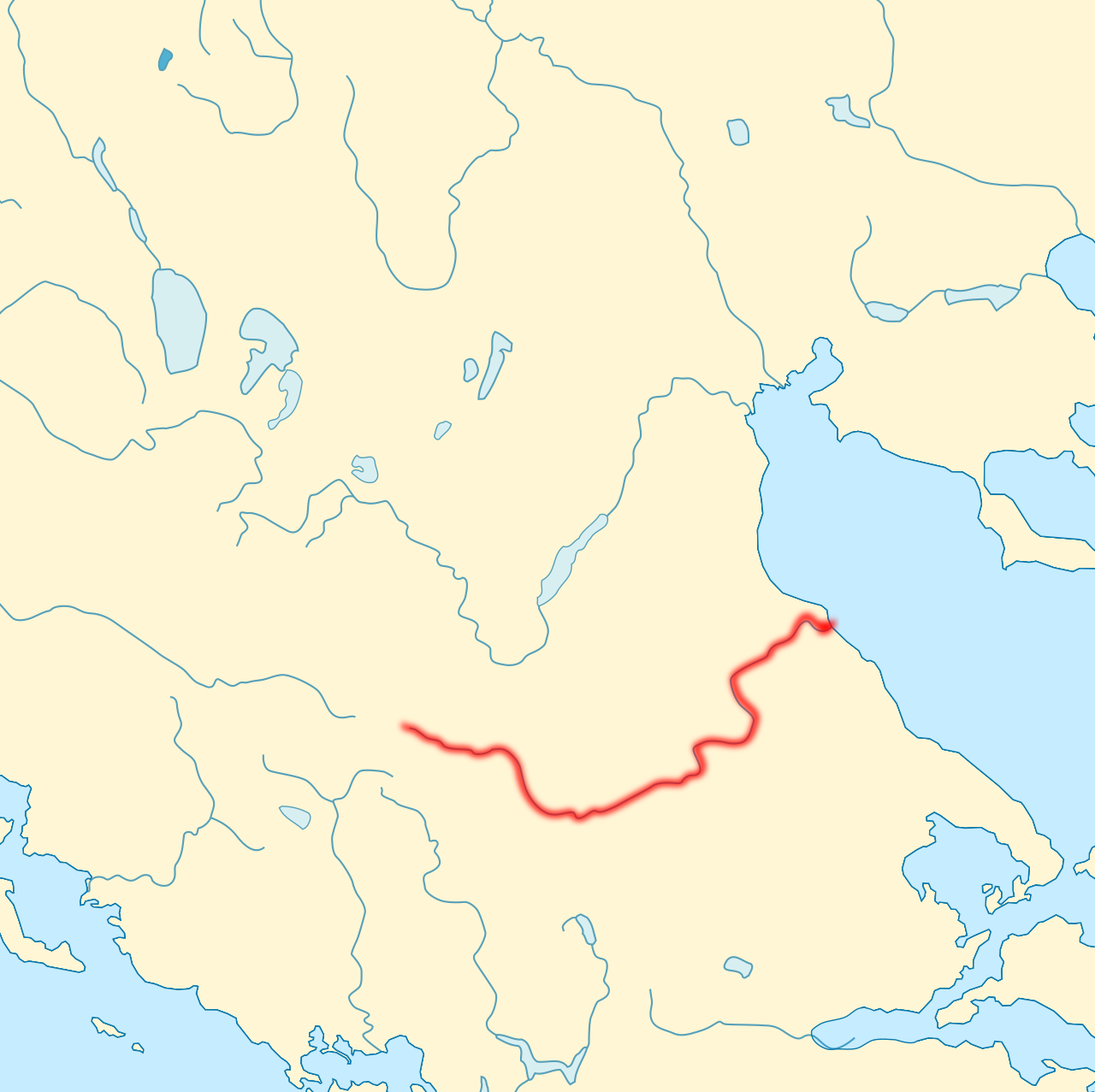
Erysichthon, whose name translates to "earth-tearer," held the title of king over Thessaly and was occasionally known by the alternate name Aethon. His parentage varies across ancient sources. In one tradition, he was the son of King Triopas, possibly by Hiscilla—herself the daughter of Myrmidon—making Iphimedeia and Phorbas his siblings. A competing account instead names Myrmidon as his father, with his mother being Peisidice, daughter of Aeolus and Enarete; in this version his brothers include Antiphus, Actor, and Dioplethes, along with a sister named Eupolemeia and possibly Hiscilla herself. His most significant offspring was his daughter Mestra, who would become the shapeshifting lover of Poseidon. The multiplicity of genealogical details suggests that Erysichthon occupied a foundational position in Thessalian royal mythology, with different local traditions claiming him for their own dynastic narratives. His royal status in Thessaly, combined with the divine connections woven into his ancestry, positioned him as a figure whose transgressions would carry cosmic consequences.
The Sacrilege at the Sacred Grove
The core of Erysichthon's myth centers on his violent desecration of a sanctuary belonging to Demeter. In Callimachus's telling, the king brought twenty men into the goddess's sacred grove and set his axe to a black poplar tree around which tree nymphs gathered to dance. The tree groaned in pain as he struck it, and Demeter, sensing the suffering, descended in the guise of an ordinary mortal woman. She pleaded with him to stop, warning of the consequences of her wrath. Erysichthon dismissed her with crude threats, swinging his axe and declaring he needed the timber to extend his house for grander feasts. Ovid's Roman retelling intensifies the scene: a massive oak draped in votive wreaths—each one a token of prayers Ceres had answered—stood as the last obstacle. His men refused to fell it, so Erysichthon seized the axe himself and killed the dryad nymph dwelling within. Her dying breath became a curse upon him. Hyginus offers yet another variant, in which Erysichthon tore down an entire temple of Demeter to harvest materials for a roof.
The Curse of Insatiable Hunger
Demeter's retaliation was absolute and eternal. She unleashed upon Erysichthon a hunger that no quantity of food could ever satisfy, and in Callimachus's version Dionysus compounded the torment by imposing an equally unquenchable thirst. The punishment was designed to be self-consuming: the more Erysichthon ate, the more ravenous he became, as though food were fuel feeding an endless fire. His own parents turned away from him in horror. He squandered his royal wealth on provisions, then liquidated every possession he owned. In Ovid's account, his desperation drove him to sell his daughter Mestra into slavery. Poseidon, her former lover, intervened by granting her the power to transform into any creature at will, freeing her from her bonds. Erysichthon, however, exploited this very gift—using her shapeshifting to sell her repeatedly to different buyers, each time to fund another round of eating. No amount of food ever broke the cycle. In the end, Ovid writes, Erysichthon consumed himself entirely; by the following morning, nothing of him remained. Hyginus adds a darker coda: a serpent was sent to torment him in his final days, and Demeter placed both the man and the snake among the stars as the constellation Ophiuchus, ensuring the punishment endured eternally.
Rationalization, Art, and Mythic Resonance
Ancient and modern interpreters have sought to extract meaning from Erysichthon's story beyond its surface narrative. Palaephatus, writing his rationalizing treatise On Unbelievable Tales, proposed that the myth grew from a real Thessalian man who fell from wealth into poverty. His beautiful daughter Mestra attracted suitors who brought horses, cattle, and other gifts to win her hand. Observers noted the household's improving fortunes and quipped that "from Mestra came the horse and the cow and the rest," a folk etymology that, Palaephatus argued, calcified into myth. The nineteenth-century scholar Müller situated the Triopas-Erysichthon traditions within an agricultural cult that simultaneously referenced the underworld. In visual art, the Pergamon Altar's Gigantomachy frieze appears to depict Demeter battling a Giant explicitly labelled "Erysichthon," blurring the line between the Thessalian king and a primordial adversary of the gods. The motif of unending hunger also connects Erysichthon to a wider family of mythic figures—Tantalus, the Roman Tarrare, and others—making him a recurring archetype of desire that can never be fulfilled.
Gallery
Frequently Asked Questions
Who is Thessaly in Y: The Last Man?
Thessaly is a supporting character in the post-apocalyptic comic series written by Brian K. Vaughan and drawn by Fiona Staples. She appears within the ensemble cast of survivors navigating the world after every male mammal on Earth suddenly died.
What role does Thessaly play in the story?
She functions as part of the broader ensemble rather than a central protagonist, embodying one of many individuals caught between survival, shifting ideology, and the search for meaning in the fractured societies that formed after the extinction event.
What is the setting Thessaly exists in?
The narrative unfolds on a post-apocalyptic Earth where all male mammals have perished overnight, leaving behind collapsed old hierarchies and new power structures—often led by the enigmatic Queens—struggling to reorganize civilization.
How does Thessaly's story arc resolve?
As a supporting ensemble member, Thessaly's thread is woven into the larger collective narrative of the series rather than following a standalone ending; her fate is part of the shared experience of the world's survivors rebuilding in the aftermath.
Why is Thessaly important to the story's themes?
She serves as a representative voice for the countless individuals reshaping society after the extinction, grounding the series' broader explorations of hierarchy, survival, and identity in a personal, human perspective.
More in Characters
Elsewhere in the Y The Last Man universe
Spotted an error? Know more?
This is a living reference — every entry is fact-audited, and reader corrections feed straight into our audit queue. Suggest an edit · See this site's audit record