
The Matriarchy
When the men vanished, the world didn't fall—it rebuilt itself around the women who remained.

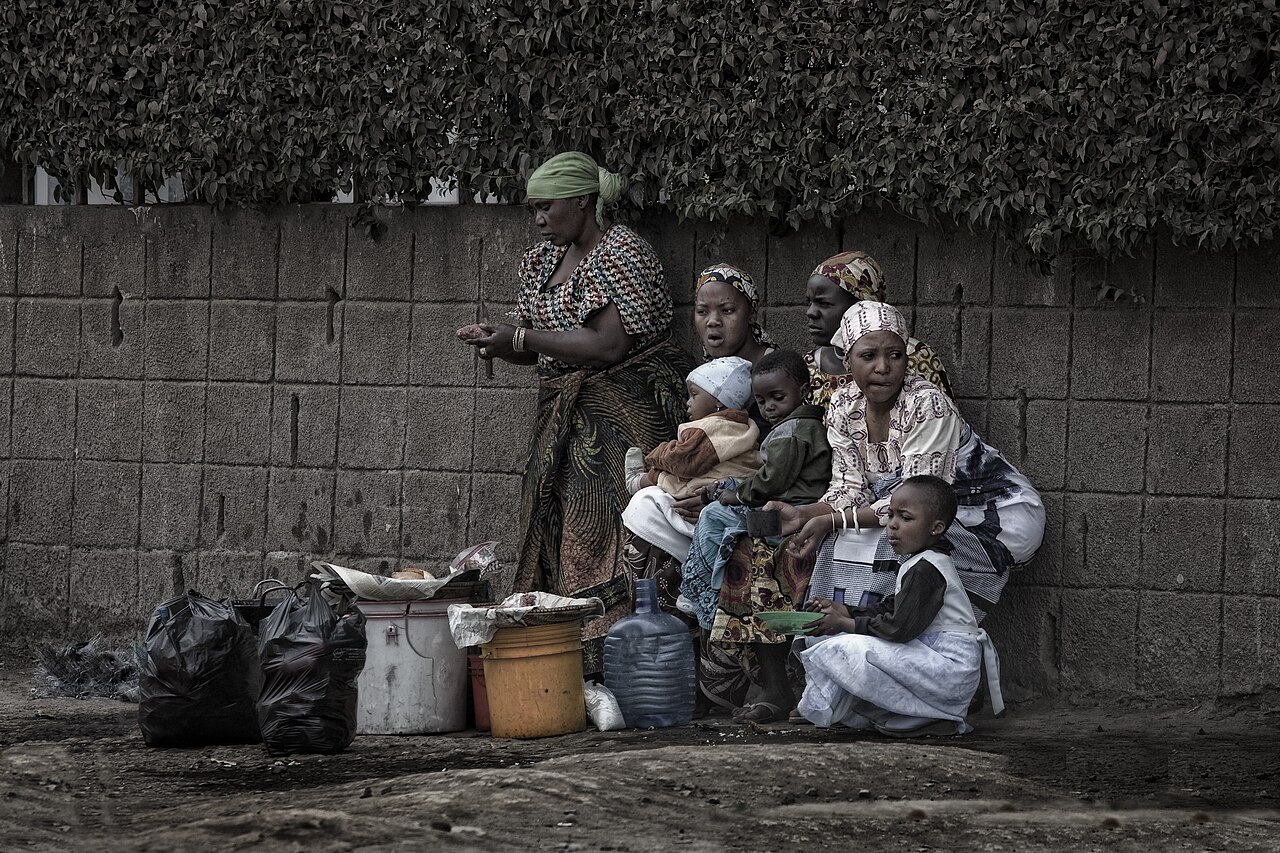
N O E L | F E A N S · CC BY 2.0
The Matriarchy is the overarching societal structure that defines the world of Y: The Last Man. Following the unexplained mass extinction of every male mammal and every human carrying a Y chromosome, the surviving population—overwhelmingly female—reorganized every institution of government, military, science, and daily life around women's leadership. What was once a parallel world of familiar politics becomes a fundamentally restructured society where power, governance, and cultural norms have been rebuilt from the ground up. In both the graphic novel by Brian K. Vaughan and Fiona Staples and the Starz television adaptation created by David E. Kelley, this new order is not a single named organization but the lived reality of the setting: a world where women hold every seat of authority, where the last known male with a Y chromosome becomes the most contested biological entity on Earth, and where the old hierarchies have been upended so thoroughly that even the idea of a 'matriarchy' is simply what 'society' means now.
- Type
- Societal / political structure (world-building element)
- Setting
- Post-die-off Earth, United States and beyond
- Source material
- Y: The Last Man (graphic novel, 2002–2012; Starz series, 2021–2023)
- Key figure affected
- Yorick 'Y' Brown, the last known Y-chromosome male
- Timeframe
- Approximately 12+ years after the die-off (TV series timeline)
- Status
- Ongoing world order; central backdrop of the narrative
Lore & Background
The die-off that inaugurates the Matriarchy is sudden, global, and biologically specific: every male mammal and every human with a Y chromosome perishes within a matter of days, while females and male mammals with X chromosomes (such as certain species) survive. There is no single villain, no weapon, no clear cause that the characters in-story can definitively identify. The event is treated as a natural catastrophe of staggering scale, and the world's response—grief, chaos, then rapid institutional reorganization—forms the pre-history that the audience encounters already in motion. In the years that follow, women assume every role that was previously held by men: presidents, generals, scientists, doctors, artists, laborers. The Matriarchy is not portrayed as a utopia or a dystopia in any simple sense; it is a pragmatic reordering. Power dynamics shift, old resentments resurface in new forms, and new ones emerge. The military and intelligence apparatuses that remain are staffed and led by women, and their priorities are shaped by a world that has lost its biological male half. Religious, philosophical, and scientific communities grapple with the implications: the extinction of an entire sex, the end of natural reproduction as it was known, and the singular, almost mythic status of any surviving Y-chromosome carrier. The existence of Yorick Brown—Y—makes the Matriarchy's stability a live question rather than a settled fact. His presence is a biological anomaly that every institution in this new world must account for, and the competing factions within the Matriarchal structure (government, military, scientific, private) each see him through a different lens: as a specimen, a threat, a resource, or a symbol. The tension between those competing interpretations drives much of the narrative conflict in both the comic and the series, and it exposes the fractures beneath the surface of a society that, however functional, was built in the shadow of an extinction it still does not fully understand.
In Their Own Story
The fluorescent lights in the sub-basement lab hum at a frequency that makes Y's teeth ache. He sits on a steel stool, wrists loosely cuffed to the armrests, and watches a woman in a pressed olive uniform pace the length of the room. She doesn't look at him. She looks at the monitors behind him—rows of bioscans, genetic readouts, the slow green pulse of his own heartbeat rendered in data. Outside, through the single high window, the city goes about its evening: women in work clothes, women in suits, women arguing on phones, women laughing. Normal. The most normal thing in the world. 'You're not a person to them,' Jo had said, the last time she'd held his hand before they'd taken him. 'You're a question they haven't decided how to answer.' He'd thought that was dramatic. Sitting here, in the hum, in the quiet, watching the woman in the olive uniform finally stop pacing and turn to look at him with an expression he can't read—curiosity, maybe, or something older and more tired—he thinks she was right. The Matriarchy built its walls around the absence of men. He is the crack in the wall. And cracks, he's learning, are where the light gets in or the air gets out, and no one in this room has decided which one they want.
Reader's Guide
The Matriarchy is the term used to describe the post-die-off societal order in Y: The Last Man, in which all positions of institutional power—executive, legislative, military, scientific, and cultural—are held by women following the global extinction of Y-chromosome males and male mammals. In-story, this structure is not 'revealed' by a single character at a single moment. It is the ambient reality of the world: the audience encounters it through the government and military apparatus that pursues Y, through the civilian infrastructure Jo and Y navigate, and through the scientific and medical institutions that study the die-off. In the Starz series, the military and intelligence figures operating against Y embody the Matriarchy's enforcement arm, while the civilian world Jo moves through shows its everyday texture. The graphic novel presents the same structure across a longer timespan, showing how the order consolidated in the years after the event. The key implication is that the Matriarchy is not a single ideology but a coalition of competing interests—state security, scientific inquiry, private power, cultural preservation—united only by the fact that women now hold every seat. This internal diversity is the source of much of the narrative tension: Y is not opposed by 'the Matriarchy' as a monolith but by specific factions within it who disagree on what he represents. Fan debate centers on whether the show and comic portray the Matriarchy as stable or on the verge of fracture. The text supports both readings: the institutions are functional, but the existence of Y introduces a variable that no existing framework was designed to handle. Some readers interpret the Matriarchy as a hopeful reimagining of power; others see it as a new hierarchy that simply replaced an old one. The source material leaves that question deliberately open. Note: This is a fan-written reference entry. Specific organizational names, ranks, and internal political structures vary between the graphic novel and the television adaptation, and some details are presented ambiguously in both. Where this entry generalizes, it is because the canon itself does not always specify.
Did You Know?
- The die-off in Y: The Last Man is biologically specific—it targets Y-chromosome males and male mammals—meaning the Matriarchy is not merely a political shift but a biological one, with no known cure or reversal within th
- The Matriarchy's structure is shown already in place when the story begins; the audience never witnesses the initial chaos of the transition, making the 'how' of the reorganization a deliberate narrative blank that fans
- In the Starz adaptation, the Matriarchy's enforcement is personified by military and intelligence figures who view Y as a containment problem, while the civilian world Jo inhabits treats the new order as simply the world
- The graphic novel by Brian K. Vaughan and Fiona Staples runs to 2012 and spans a longer timeline than the two-season Starz series, giving the Matriarchy more time to evolve, fracture, and re-form across its pages.
The Definitional Divide: Dominance versus Egalitarianism
At the heart of matriarchy studies lies a sharp disagreement about what the term actually means. On one side, historian Helen Diner and like-minded scholars picture matriarchies as societies in which women hold a near-total grip on government and social life. Diner cast the Amazons as a radical feminist extreme of the human family and argued that North African women once exercised full political control before patriarchal structures swept them aside. On the opposite side, Heide Göttner-Abendroth and Margot Adler contend that this dominance framing is simply a mirror of patriarchal thinking: because men rule over women in a patriarchy, people reflexively imagine women ruling over men in a matriarchy. Adler, drawing on a Marxist lineage, instead describes a pre-class arrangement in which both sexes share production and authority equally. Advocates of this egalitarian reading stress maternal values, goddess-centered worship, and the central role of mothers in shaping community life. The word itself, built from Latin mater and Greek arkhein, merely means mother-rule, leaving the interpretive weight entirely to the scholars who wield it.
Untangling the Terminology: Matriarchy and Its Neighbors
One of the most persistent obstacles in matriarchy scholarship is the habit of collapsing several distinct concepts into a single label. Matrilineality traces descent, inheritance, and identity through female lines. Matrilocality describes married couples settling near the wife's family rather than the husband's. Matrifocality refers to households where women serve as the primary leaders. None of these, standing alone, qualifies as a matriarchy in the strict sense, yet some commentators treat any non-patriarchal arrangement as matriarchal by default. A cluster of related words—gynecocracy, gynarchy, gyneocracy—each point to female rule over men, while matriology, rooted in Greek logos, names the theological study of motherly dimensions in female deities. When Marija Gimbutas, Gerda Lerner, and Riane Eisler described their hypotheses about goddess-worshipping, women-centered societies in prehistoric Europe, they deliberately chose the term matristic over matriarchal. Gimbutas explained that she preferred matristic specifically to sidestep the contested baggage of matriarchy while still weaving matriliny into her analytical framework.
The Anthropological Consensus and the Long Shadow of History
Mainstream anthropology, operating from the dominance-based definition, maintains that no documented society has ever fully excluded men from positions of authority. Donald Brown placed male dominance in public political affairs on his list of human cultural universals, a position he presented as the prevailing view across the discipline. Yet the idea that women's rule once preceded men's is far from a modern invention. Nineteenth-century thinkers such as Bachofen championed the notion, and it found fresh momentum within second-wave feminist discourse. Göttner-Abendroth has argued that the field's reluctance to take matriarchies seriously reflects a bias born of living inside patriarchal structures, where the default assumption is that one sex must dominate the other. In response, the Modern Matriarchal Studies school, which she leads, calls for a more rigorous, scientifically grounded redefinition. She breaks the concept into four dimensions: social organization through matriliny, matrilocality, matrifocality, and clans; consensus-based political decision-making; a gift economy primarily managed by women; and a religious orientation centered on rebirth with the divine feminine as the ultimate principle.
Voices from the Margins: Indigenous and Regional Perspectives
Beyond the academic debate, matriarchal frameworks carry real political and identity weight in specific cultural contexts. In South America, Bamberger's 1974 examination of matriarchal myths suggested that portraying women from a supposed matriarchal era as immoral served a social function: it supplied a narrative justification for patriarchal overthrow and offered a tool for constraining contemporary women. More recently, indigenous representatives addressing the United Nations have invoked matriarchal language to underscore the central role of women in their communities, warning that these matriarchal or matriarchal-in-character systems face the ongoing threat of patriarchic displacement. In Old Europe, scholars such as Gimbutas, Lerner, and Eisler have proposed that prehistoric and ancient civilizations were organized around goddess worship and women-centered social structures, though they often preferred the term matristic to avoid the contested connotations of matriarchal. These regional and cultural perspectives remind readers that the matriarchy debate is not purely theoretical but is entangled with questions of sovereignty, cultural preservation, and the right of communities to narrate their own social histories.
Gallery
More in Lore & History
Elsewhere in the Y The Last Man universe
Spotted an error? Know more?
This is a living reference — every entry is fact-audited, and reader corrections feed straight into our audit queue. Suggest an edit · See this site's audit record