
The Y Chromosome
One chromosome, one catastrophe, one man left to ask why.

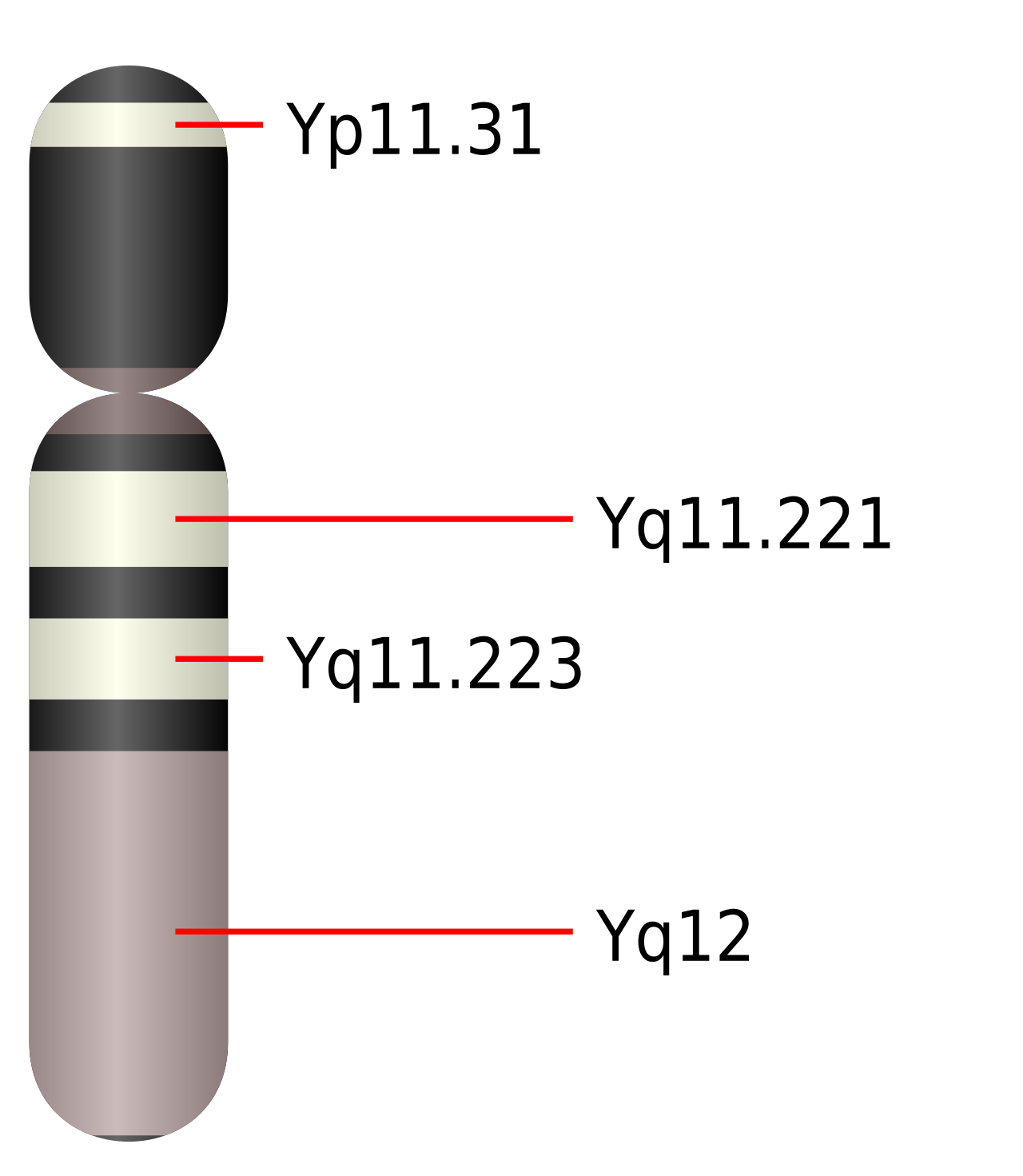
Hong Shi , Xuebin Qi , Hua Zhong , Yi Peng, Xiaoming Zhang, Runlin Z. Ma, Bing S · CC BY 2.5
The Y chromosome is the sex-determining genetic element in mammals, the tiny chromosome that, in the world of Y: The Last Man, becomes the axis around which an entire civilization's collapse turns. When every male mammal on Earth dies in a single, simultaneous event, the Y chromosome shifts from a quiet biological fact into the story's central mystery: what happened to it, and why did one man—Yorick 'Y' Brown—survive intact alongside his pet cat? Rather than a character, the Y chromosome functions as the story's inciting wound. It is the thing that was taken, the mechanism that was broken, and the riddle that Y, his mother Jennifer Brown, and the communities they encounter spend one season trying to unravel. Its presence is felt in every conversation about identity, survival, and what it means to be the last of a kind.
- What it is
- The sex-determining chromosome in mammals; the genetic marker of male biology
- Role in the story
- Central mystery — its altered or destroyed function triggers the mass die-off of all male mammals
- First appears
- Season 1, Episode 1 (the inciting die-off event)
- Status
- Unresolved mystery at the end of the series
- Sole surviving carrier
- Yorick 'Y' Brown (and his male cat)
Lore & Background
In the world of the series, the Y chromosome is not treated as a distant textbook abstraction. It is the thing that made Y a boy, that made his father a man, that made every bull, every stallion, every male cat on the planet what it was. When the die-off hits, the chromosome's function is simply gone in every male mammal except Y and his cat. The show never reduces it to a single neat scientific explanation; instead, it becomes a symbol layered with questions about gender, biology, and the fragility of the categories we build our lives around. Throughout the single season, characters approach the Y chromosome from very different angles. Jennifer Brown, a U.S. Congresswoman, grapples with the clinical reality of what was lost. Sam, a trans man who joins Y's journey, brings a deeply personal lens to what the chromosome represents socially and culturally. The communities Y passes through—some hostile, some desperate, some quietly hopeful—each interpret the loss of the Y chromosome through the prism of their own grief, fear, or opportunity. The chromosome is never just biology in the show; it is identity, heritage, and the thread connecting every person to the men and boys they knew. What makes the Y chromosome's role in the narrative so resonant for fans is its ambiguity. The series resists a single, tidy answer. The mechanism of the die-off is hinted at, theorized, and debated by characters, but the full truth remains elusive even as the credits roll. That open wound is, for many viewers, the point: the Y chromosome is not a puzzle to be solved but a question to be lived with.
In Their Own Story
The lab is quiet in a way it has never been quiet before. Josephine sits at the bench, her fingers tracing the ghost-outline of a pipette she used to handle a hundred times a day. On the screen, the sequence is there—Y, the little chromosome, the one that used to be a quiet letter in the alphabet of every male cell on the planet. Now it is a scar. A missing page in a book no one can finish reading. She pulls up Y's profile, the one male mammal still walking the Earth, and watches the little waveform of his heartbeat on the monitor. Somewhere out in the field, he is probably arguing with a cat about a route. She almost smiles. Almost. The chromosome is gone from everyone else. For him, it is still there, stubborn and small, like a single candle in a house where every other light has been snuffed out. She closes the file. Opens it again. Closes it. The candle does not go out. Not yet.
Reader's Guide
The Y chromosome is the sex-determining genetic element in mammals, and in Y: The Last Man it is the biological substrate of the central catastrophe: a simultaneous, global die-off of all male mammals that leaves only Yorick 'Y' Brown and his male cat alive. The show, created by Michael Green for Starz and adapted from the Brian K. Vaughan / Fiona Staples graphic novel, introduces the event in the opening moments of Season 1, Episode 1, framing the loss as instantaneous and total. In-story, the precise mechanism is never fully and definitively explained. Josephine Brown, a former researcher, and other characters offer theories—viral, genetic, environmental—but the narrative withholds a single authoritative answer. This deliberate ambiguity is a point of active fan debate: some viewers read the die-off as a targeted genetic event, others as an ecological or even metaphysical rupture. The show's own dialogue never closes the question. The implications are world-shaping. Without the Y chromosome's function in the broader population, the social, economic, and reproductive structures of every community Y encounters are in freefall. The chromosome becomes a proxy for gender identity, heritage, and the meaning of 'male' in a world where the category has been almost entirely erased. As a fan document, this entry notes that interpretations vary widely and the text itself resists a single reading. Treat any definitive 'cause' as speculative unless directly stated by a character in a specific scene.
Did You Know?
- The Y chromosome's role in the show is deliberately left as an open mystery; the series never commits to a single, fully explained mechanism for the die-off, making it one of the most debated topics in the fan community.
- Yorick 'Y' Brown's survival is not explained by any known genetic mutation in the text—he simply is the exception, which the characters treat as both a miracle and a burden without ever fully rationalizing it.
- The male cat that survives alongside Y is a deliberate echo of the show's title and theme
Discovery and the Alphabetical Naming
The Y chromosome entered scientific awareness in 1905 through the parallel work of two researchers. Nettie Stevens, studying the mealworm Tenebrio molitor at Bryn Mawr College, recognized that chromosomes existed in pairs and that the smaller member of the pair was the counterpart to the X chromosome Hermann Henking had described in 1890. That same year, Edmund Beecher Wilson reached an independent conclusion using Hemiptera. Stevens also overturned an earlier claim by Clarence Erwin McClung that the X chromosome alone dictated sex; she showed that it is the presence or absence of the Y that tips development toward maleness. By the early 1920s, Theophilus Painter had confirmed that this XY mechanism governs sex in humans and other mammals. The letter Y was assigned purely alphabetically, following Henking's X. A persistent myth holds that the chromosome was named for its visual resemblance to the letter Y under a microscope, but in reality all chromosomes appear as amorphous blobs except during mitosis, when they assume a vaguely X-shaped form. The Y's two short branches can merge optically into something resembling a descender, yet this is entirely coincidental and played no role in the naming.
The SRY Switch and Chromosomal Variations
In therian mammals, the Y chromosome carries a gene of extraordinary consequence: SRY. This gene acts as a master switch, triggering the differentiation of gonads into testes and thereby initiating the cascade of phenotypic male development. Because the Y is inherited exclusively from father to son, it travels through generations along a strictly paternal line. In a typical male cell, one Y sits alongside one X; in a typical female cell, two X chromosomes occupy the sex-chromosome slot. Yet nature frequently departs from this tidy arrangement. An extra Y produces Jacob's Syndrome, while an additional X leads to Klinefelter syndrome. Three X chromosomes yield Trisomy X, and a lone X with no Y at all results in Turner Syndrome, also called Monosomy X. Perhaps most strikingly, some individuals carrying a full XY karyotype develop as phenotypic females when mutations strike SRY or the related gene MAP3K1, demonstrating that the Y's influence, while powerful, is not absolute. Variations in the Y chromosome are broadly linked to atypical sexual development and fertility challenges across the species.
From Autosomes to Sex Chromosomes
Long before the Y chromosome existed as a distinct entity, the X and Y were simply a matched pair of autosomes with no special sexual role. The split began when an ancestral animal acquired an allelic variation, a so-called sex locus, such that merely carrying that allele pushed development toward the male phenotype. Over vast stretches of time, the two chromosomes diverged: the Y shed the bulk of its original gene content while retaining and acquiring only a handful dedicated to sex differentiation. For decades, scientists assumed this divergence was roughly 300 million years old. A 2008 analysis of the platypus genome overturned that timeline, suggesting the therian XY system could not predate the 166-million-year split between monotremes and other mammals. The evidence lay in the observation that sequences found on the X chromosomes of marsupials and eutherian mammals are absent from the autosomes of platypus and birds, contradicting earlier erroneous reports. Before any sex chromosomes existed at all, many ectothermic vertebrates, especially reptiles, determined sex through environmental cues like incubation temperature, and some species were sequential or simultaneous hermaphrodites, producing both gamete types within a single organism.
Gene Loss, Recombination Barriers, and a Fading Future
During meiosis, most chromosomes swap genetic material through recombination, but the Y chromosome is a notable exception. It recombines freely only within a small shared zone called the pseudoautosomal region; everywhere else, recombination is actively suppressed. This suppression is essential because the non-recombining stretches house the very genes that drive male sexual differentiation, and without the barrier those genes would be shuffled away, producing infertility. The same lack of recombination makes the Y an exceptionally clean marker for tracing human ancestry, since recombination muddies the mathematical models used to reconstruct lineages. The cost of that isolation is steep. One estimate holds that the human Y has already lost 1,393 of its original 1,438 genes, a rate of roughly 4.6 genes per million years. Extrapolated linearly, that pace would strip the chromosome of every functional gene within ten million years, or five million if the younger 160-million-year origin is correct. Comparative genomics shows many other mammals undergoing a parallel decline. The driving forces appear to be a high mutation rate, inefficient natural selection, and genetic drift, suggesting degeneration may be the inevitable fate of any non-recombining sex chromosome. The Y has diverged by about 30 percent between humans and chimpanzees, making it among the fastest-evolving regions of the genome.
Gallery




Frequently Asked Questions
What role does the Y chromosome play in Y: The Last Man?
It is the sex-determining genetic element in male mammals, and in the story it becomes the central unexplained mystery. The simultaneous death of every male mammal on Earth is tied to something happening to this chromosome, though the exact mechanism is never fully revealed.
Why did all male mammals die in Season 1?
The die-off strikes every male mammal on the planet in a single instant during the very first episode, and the show attributes it to a failure or alteration in the Y chromosome's function. The precise cause—whether viral, genetic, or something else—remains deliberately unexplained throughout the series.
Why did Yorick Brown and his cat survive the event?
Y and his male cat are the only two male mammals left alive after the die-off, but the narrative never provides a confirmed biological reason for their immunity. Their survival is the driving question that propels the entire plot forward.
How is the Y chromosome portrayed in the show versus real biology?
In actual genetics it is a small chromosome carrying the SRY gene and other male-determining markers. In Y: The Last Man it is elevated from a quiet biological fact into the story's inciting event—the broken mechanism around which the collapse of an entire civilization revolves.
More in Lore & History
Elsewhere in the Y The Last Man universe
Spotted an error? Know more?
This is a living reference — every entry is fact-audited, and reader corrections feed straight into our audit queue. Suggest an edit · See this site's audit record